No event detector was trained. An event fires when one of Clef's answers changes and holds for two frames. A hit is within 10 seconds of the real moment.
The lateness is mostly the sampling. Looking at one frame per second instead of every five, ignition, the 100 km line and fairing jettison were each caught in the exact second.
The 19 questions fall into four groups. Two work, one does not, one is unproven.
Which panels, charts, maps and insets are showing.
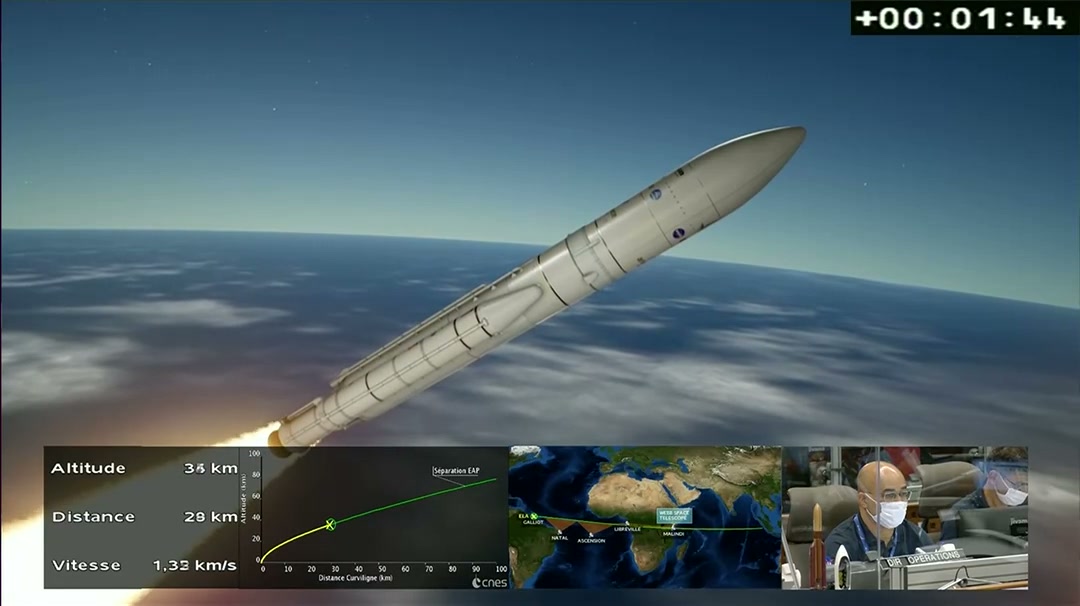
Clock, altitude, speed, distance: 260 of 261 correct.
Boosters, engine flame and flight phase are near guesswork.
Only 6 points better than always giving the commonest answer.
Clef is not a chatbot. It takes a picture and a list of multiple-choice questions and returns a probability for every option in one pass, so there is no prose to parse and every answer carries a confidence.
19 questions down, 66 frames across. Brighter means more confident, so bright red is confidently wrong. The right-hand column compares accuracy with always giving the commonest answer. Hover for the frame, click to jump the clip there.
Group every answer by how confident Clef was, then check how often each group was right. The top group is right 99% of the time. That gives a workable rule: act on the confident answers automatically and send the rest to a person. The booster errors are the exception: they sit at 80–95% confidence.
One broadcast, 66 frames, labels checked by one person. A single frame moves any question by 1.5 points.
Rewording the question, sampling every second and giving the model its previous answers all left it in place. It is a model error, not a setup error.
"Is this a highlight?" and "is it safe to cut away?" beat the commonest answer by about 6 points. Not enough to automate an editor's call.
Clef keeps saying "on the pad" until the rocket is well clear, so liftoff is 9 to 10 seconds late even at one frame per second.
About 1.5 seconds per frame, on one afternoon, through one provider.
The broadcast includes partner graphics. Anything client-facing should use footage the company owns.
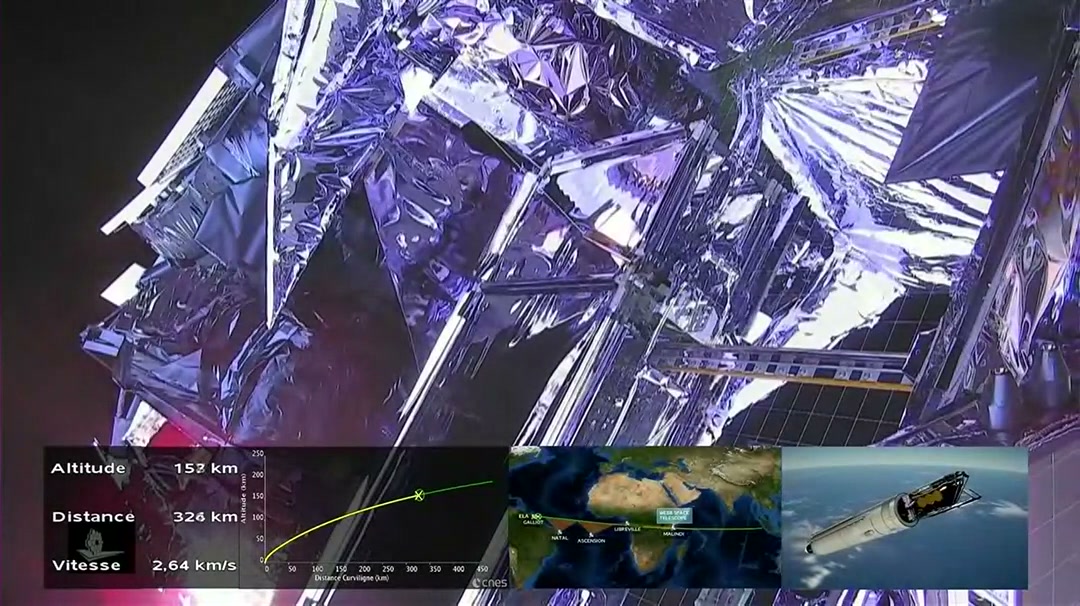
Late in the clip the rocket is not in the main picture, but Clef kept answering "in flight, boosters separated". It was describing the small animation in the corner. We had never told it to ignore the insets, so that failure was our question, not the model.
Rewording fixed it and broke a different question, which took one more rewording to recover. Every new use needs its questions tuned against labelled frames first.
A sixth of the price, eight points worse, and no faster.
| Overall accuracy | 88.6% → 80.9% |
| Editorial questions | 87% → 51% |
| Cost for the clip | $0.046 → $0.007 |
No gain, and slightly worse exactly where the picture had just changed.
| Overall accuracy | 88.6% → 87.5% |
| When the truth just changed | 76% → 70% |
| False alarms | 1 → 2 |
Timing to the second, at five times the cost. Boosters still missed.
| Ignition | +9 s → 0 s |
| Fairing jettison | +2 s → 0 s |
| Cost per minute | $0.008 → $0.042 |
The broadcast hides the countdown from 0:50 to 2:10, so this fired 69 seconds late. "A flame appears" works.
Every question has a "can't tell" or "not visible" option, so the model can decline instead of inventing an answer.
Planned, but it needs a clip the company owns. This is the next step.
Reading a scoreboard or on-screen graphic is the proven strength. Detecting the action itself, a wicket or a goal, is the booster question again and should be assumed weak until tested.
Knowing what kind of shot is on screen supports automatic chaptering and "find every clip showing…" search.
Auto-accept the 59% of answers given at high confidence and review the rest by hand.
The editorial questions barely beat the commonest answer.
Cost is not the obstacle: all six runs behind this page, 519 model calls, came to 32 cents.